3-in-1 laser machine or specialised lasers: which to buy?
Pros and cons of 3-in-1 combination devices versus specialised lasers: price, space, a shared base unit that can fail, weaker handpieces, how to choose.
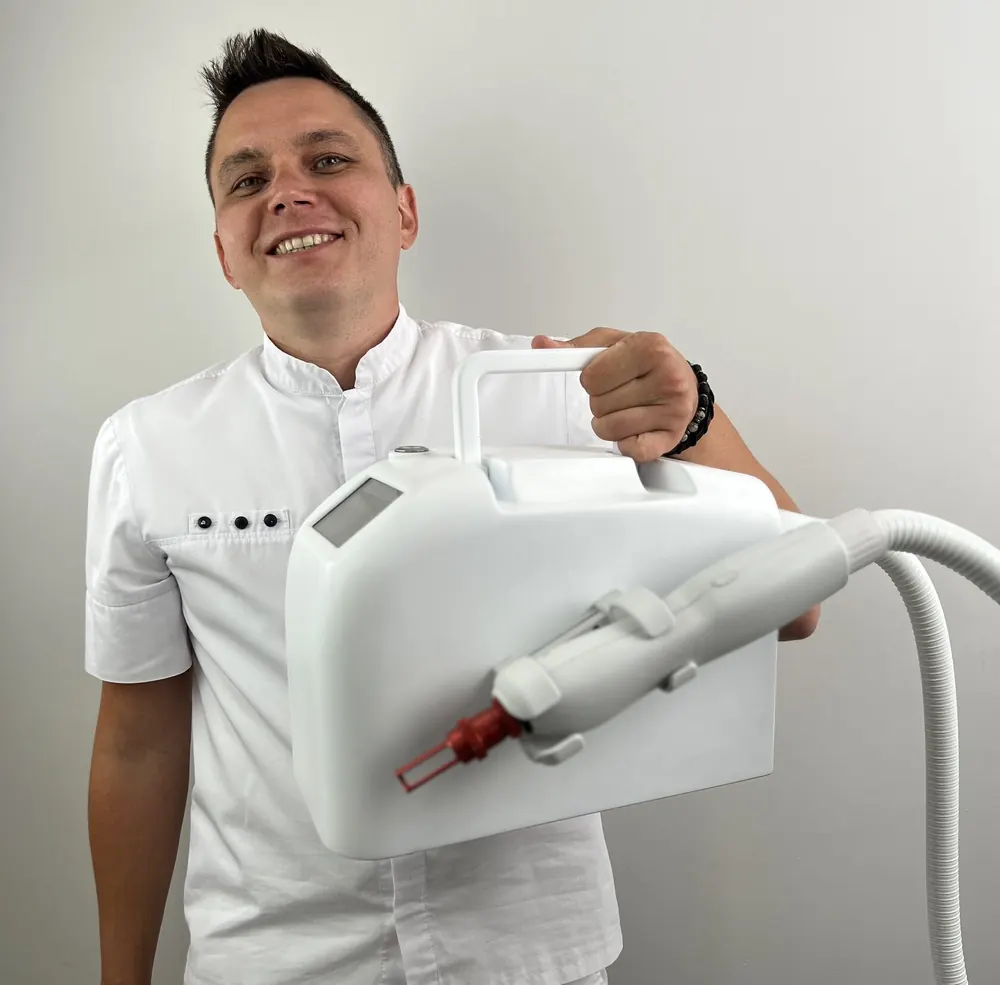

Which device to choose: 2-in-1, 3-in-1, 5-in-1, 8-in-1
or separate specialised devices for each service?
Both types of device have their pros and cons, and you will have to make the decision yourself, based on your own specific situation!
Let’s look at combination devices that bring several functions together!
You need to understand that what is described for budget-class equipment is far from always what the device actually does!
I suggest you check that the equipment has the objective capability to perform these functions.
Most often, devices that combine several functions and really do perform them have several different handpieces! If a device has only one handpiece and it is claimed to perform a million functions, you should be sceptical and request the technical specifications and an explanation of how each function is achieved!
When a device has many different handpieces and each one performs a specific function, that is a much more realistic situation!
In this case, the main unit provides the power supply, contains the cooling and control systems, and serves as the base for all the handpieces!
Such devices do exist, there are quite a lot of them on the market, and they really do perform a whole range of functions! Most often this is a combination of a photo flash (IPL), a Q-switched Nd:YAG laser, radiofrequency, possibly ultrasound, and then there are variations on what else manufacturers may add to such a combination unit.
The defining feature of these devices is that they have one power supply, one cooling system and one control system, to which different handpieces are connected!

What are the advantages of this kind of equipment?
The first is that they are compact: instead of 5 different devices in separate housings, each taking up a lot of space, you have one housing with several handpieces! This is a much more compact arrangement and is advantageous when the floor space of your treatment room or clinic is limited!
Another advantage is that, most often, it saves money! Devices that combine a number of functions usually cost less than several separate devices covering all those functions. This is because separate devices each need their own power supply, their own cooling system, their own controls, screen and so on! So by making one main unit and connecting new handpieces, production becomes much cheaper.
What are the disadvantages of this kind of equipment?
If the device is in use with one handpiece in one treatment room, then all its other functions are automatically unavailable too — you will have limitations, and that is a drawback!
The next drawback is that if the main unit breaks down, you immediately lose 5–6 areas of your work and procedures until the main unit is repaired — that is also a risk!
And third — most often, these devices do cut corners on quality. Usually the handpieces in such devices are less powerful than those of highly specialised devices!
Compactness, mobility and cost make this a good solution for a cosmetologist who works alone and doesn’t need to run several procedures in parallel.

Now let’s look at the pros and cons of separate equipment specialised by area!
First of all, among the advantages: each device has its own power supply, its own cooling, its own screen and controls. If one device breaks down for some reason, you don’t lose the functions of the other devices — they are independent!
Another advantage: if one device is in use in one room, or if you have several working rooms and several specialists, the other devices can be moved freely, so you don’t lose time and your other services don’t sit idle!
The third advantage: highly specialised equipment is usually more effective, is made with a wider range of settings, and most often with higher-quality components dedicated to performing one function!
Now the drawbacks — the cost of separate good-quality devices: they will be quite expensive! Then there is their size and the need to find room for them — most often they take up more space!
Each type of device has both pros and cons, so choose based on your needs, your budget and your priorities! A reminder for those working in Russia: only buy equipment that has a registration certificate from Roszdravnadzor (the Russian federal healthcare regulator) — this means it is approved for use in the Russian Federation!
Frequently asked questions
Is a 3-in-1 laser machine worth buying?
It depends on your situation. Combination devices are compact and usually cheaper, but only one handpiece can be used at a time, a breakdown of the main unit stops all its functions, and their handpieces are usually less powerful than those of specialised devices.
Who is a 3-in-1 device a good choice for?
Compactness, mobility and cost make it a good solution for a cosmetologist who works alone and doesn't need to run several procedures in parallel.
How do you check a multi-function laser device before buying?
Be sceptical if a single handpiece is claimed to perform many functions: request the technical specifications and an explanation of how each function is achieved. A device with a separate handpiece for each function is a much more realistic situation.