Can a plasma pen really remove a tattoo or PMU?
A plasma pen is not “cold plasma”: its arc reaches thousands of degrees and burns skin. Why using it on tattoos and PMU risks scars and pigment changes.
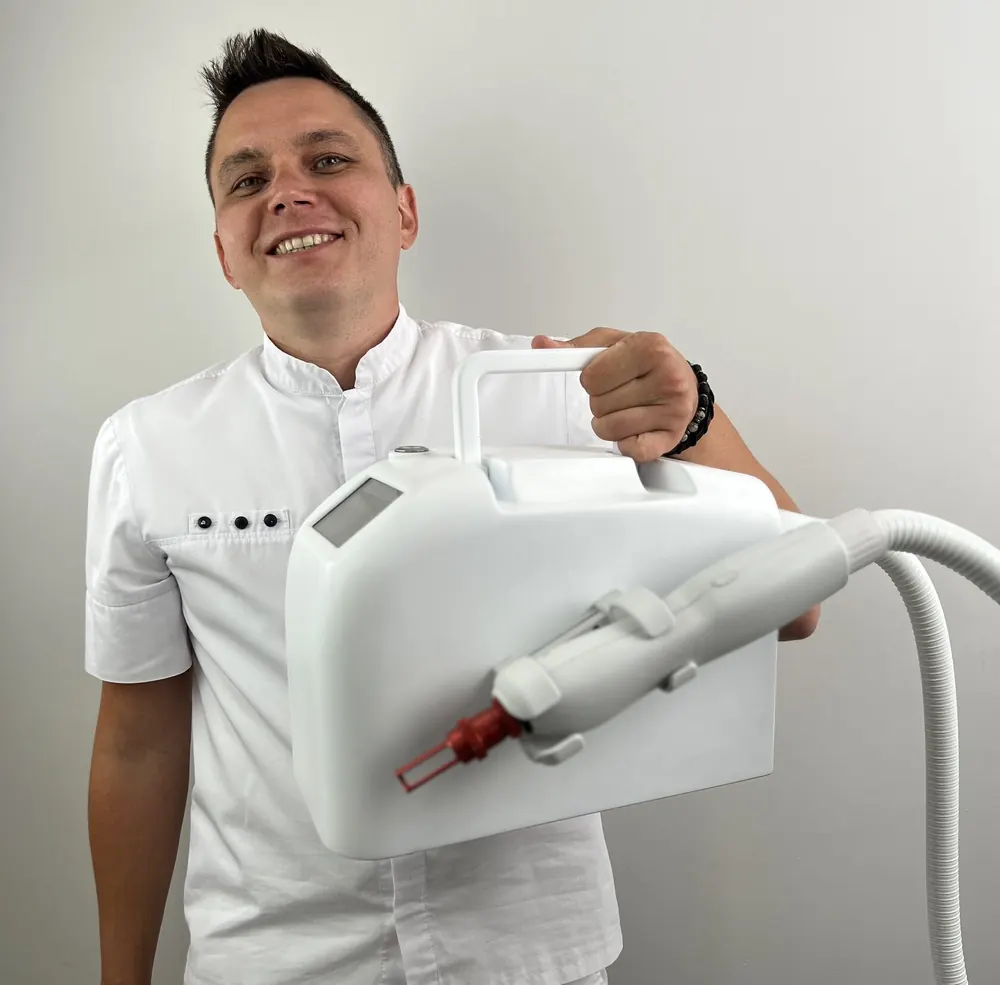
Tattoo and permanent makeup removal with a Plasma Pen
“Plasma pen” — what a beautiful and even mesmerising technological name! But what is behind such a poetic name?
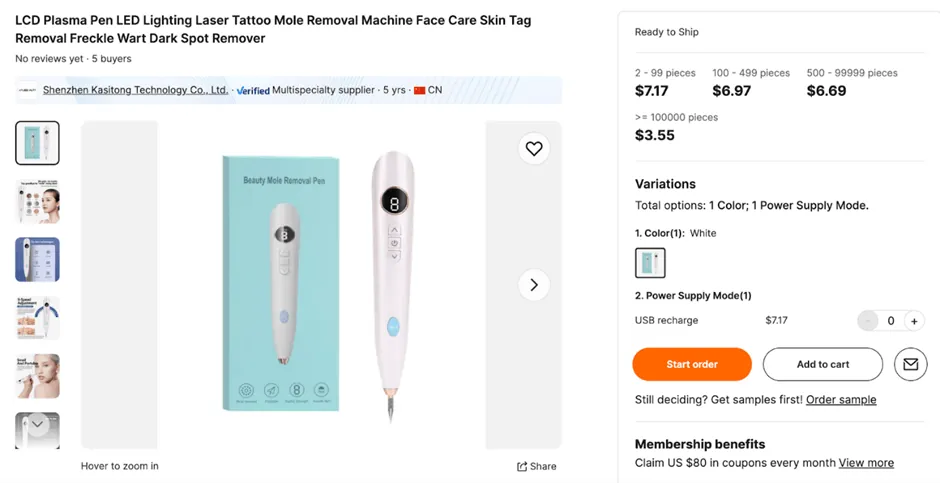
Plasma Pen on a marketplace
The science behind Plasma Pen
A Plasma Pen (the kind commonly used by PMU artists and beauticians) is usually a small pen-shaped device that generates a high-voltage current (even up to several thousand volts), but the amperage is small, usually a few milliamperes. Such an electric current is enough to create a plasma arc from ionised atmospheric air. The temperature of plasma from atmospheric air obtained in this way using Plasma Pen can reach several thousand degrees Celsius. Therefore, the name “cold plasma” for Plasma Pen is incorrect! It is a full-fledged high-temperature effect on the skin, although very localised.
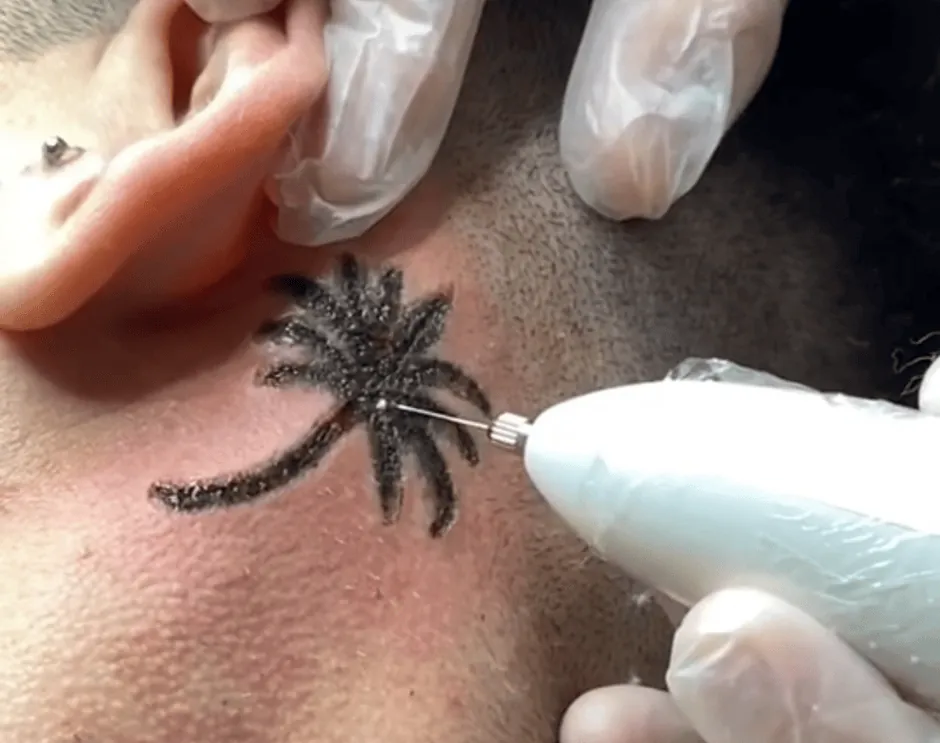
Close-up of a tattoo removal process using a Plasma Pen
Therefore, the first conclusion is that Plasma Pen really generates plasma due to electrical breakdown of atmospheric air, but it is not “cold plasma” as many believe, reassuring themselves that it is absolutely safe.
It is enough just to look at how the skin behaves when exposed to such plasma: it coagulates, and this is a direct sign of high-temperature exposure.
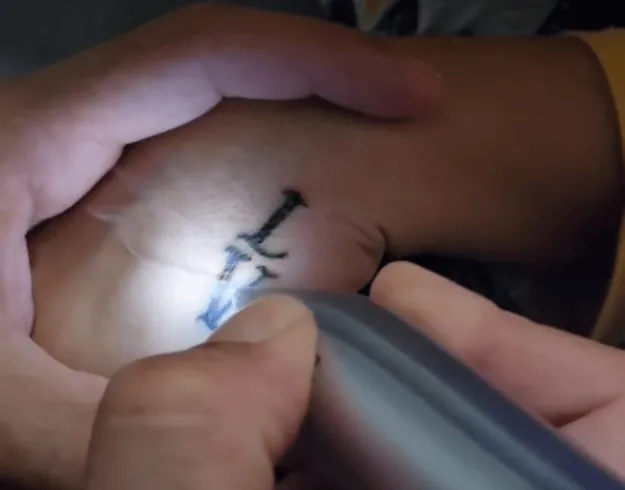
Tattoo removal procedure using a Plasma Pen on a small black ink design on the wrist
To put it quite simply, Plasma Pen just causes a localised limited burn. In defence of Plasma Pen I can say that with the help of such a device you can really remove small benign skin formations that just need to be destroyed, such as small papillomas or keratomas. But all other areas of application of Plasma Pen, such as tattoo and PMU removal, removal of moles, removal of age spots and skin rejuvenation, already carry a very high risk of complications.
Potential complications and risks
What complications can be caused by using Plasma Pen inappropriately or believing in its special “cold plasma” and safety?
Hyperpigmentation or hypopigmentation: Changes in skin pigmentation may occur, either in the form of darkening (hyperpigmentation) or lightening (hypopigmentation) of the skin, as a result of severe trauma and prolonged skin healing.
Scarring: Improper use of Plasma Pen and/or poor aftercare can lead to scarring.
Well, OK, with any device, if used improperly, you can get complications just as bad. Yes, I agree, even the most modern and expensive tattoo removal lasers can easily cause skin wounds, blisters and scarring. BUT! In the case of Plasma Pen it is a different story – this method is simply not designed for safe removal of tattoos, no matter what you are promised by salesmen and advertising!
The very mechanism of tattoo removal with Plasma Pen implies JUST DESTROYING the skin along with the pigment, that is, in fact, it is just burning the skin over the entire area of the tattoo or permanent makeup. And this is a direct path to scarring of the skin and the chances that the skin will be normal after such treatment are minuscule. And if the skin after tattoo removal with Plasma Pen remains normal, it is more likely a miracle and will happen “in spite of” rather than “thanks to” Plasma Pen!
So, if you have a choice of how to remove your tattoo or PMU — a specialised nanosecond/picosecond laser or the “cold plasma” of a “safe” Plasma Pen — then choose the laser and remember the prohibitive risks of burning the skin over the whole area! Take care of your health and be aware!
Frequently asked questions
Is a plasma pen cold plasma?
No. The plasma arc it creates from ionised atmospheric air can reach several thousand degrees Celsius, so it is a full-fledged, though very localised, high-temperature effect on the skin, which coagulates.
Can a plasma pen remove a tattoo or PMU?
Its mechanism is simply burning the skin over the entire area along with the pigment, a direct path to scarring and pigmentation changes. The author advises choosing a specialised nanosecond or picosecond laser instead.
What is a plasma pen actually suitable for?
Removing small benign skin formations that just need to be destroyed, such as small papillomas or keratomas. Tattoo and PMU removal, mole and age spot removal and skin rejuvenation with it carry a very high risk of complications.