Covering up old PMU: good idea or bad?
Why covering up old bluish PMU or a tattoo fails: the pigments mix and the old colour shows through within 1–3 months. Remove the old pigment first.

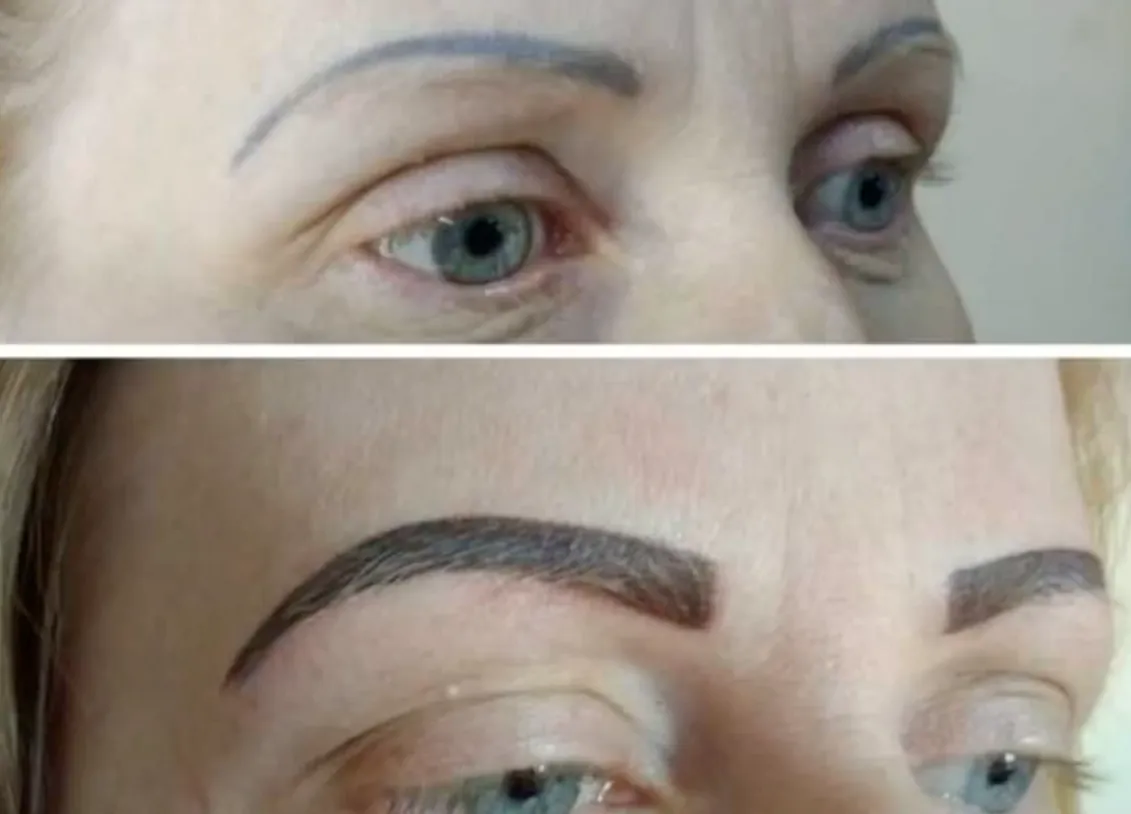
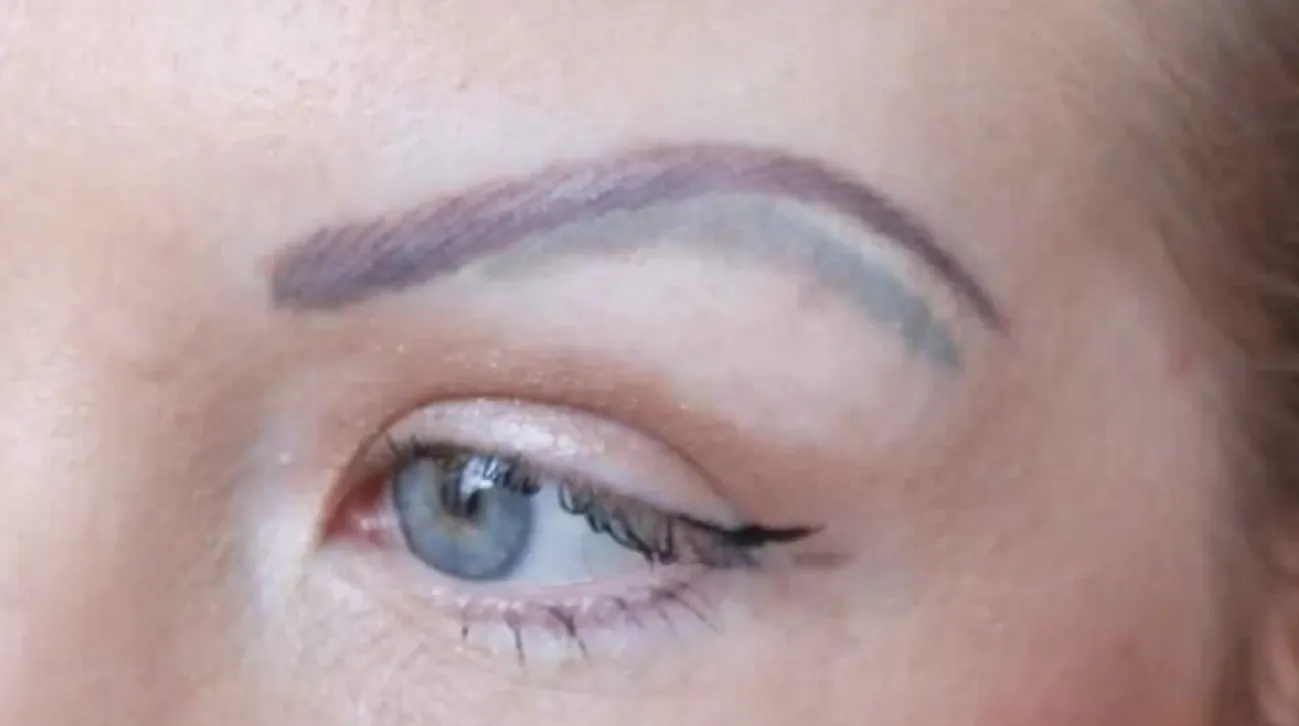
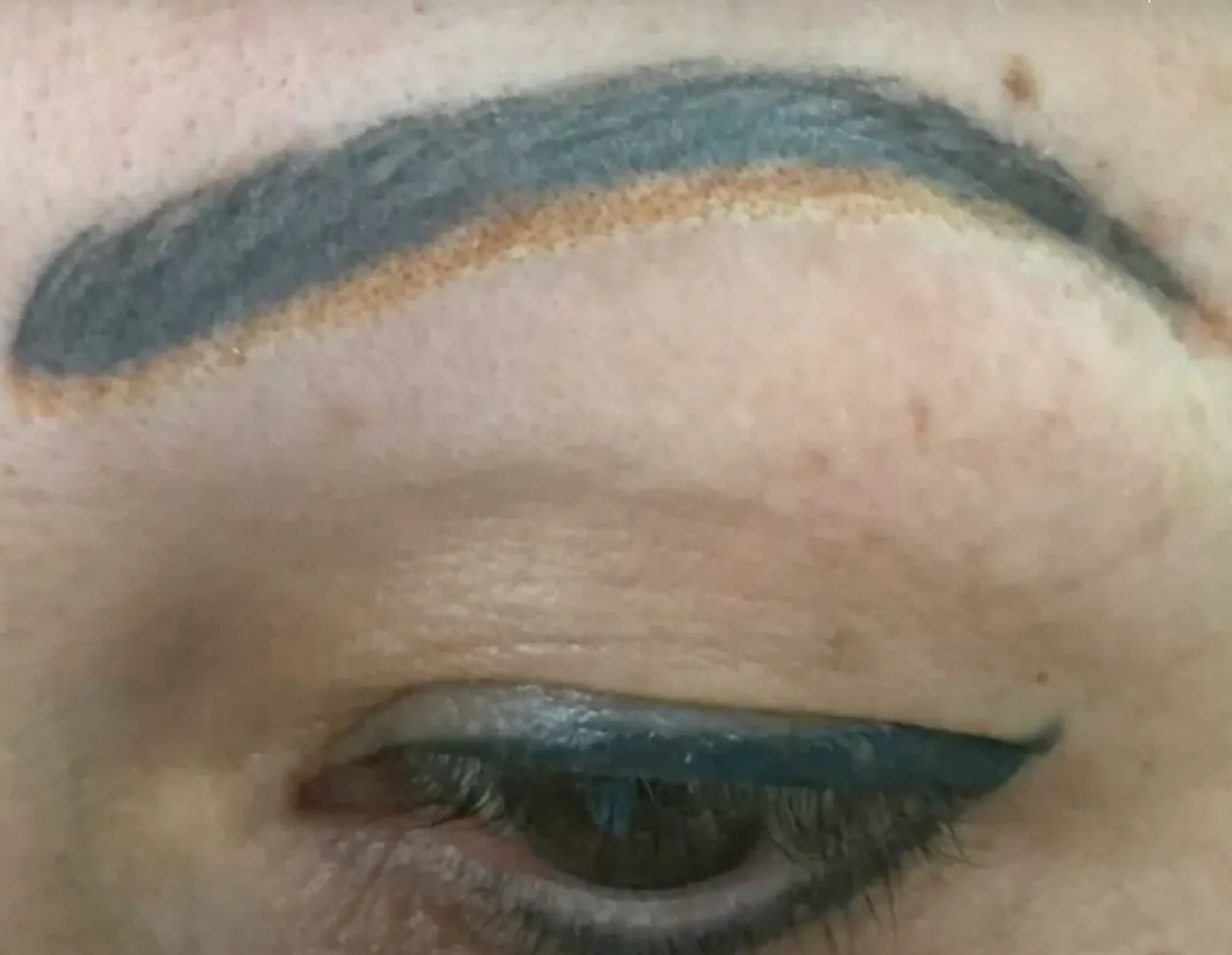
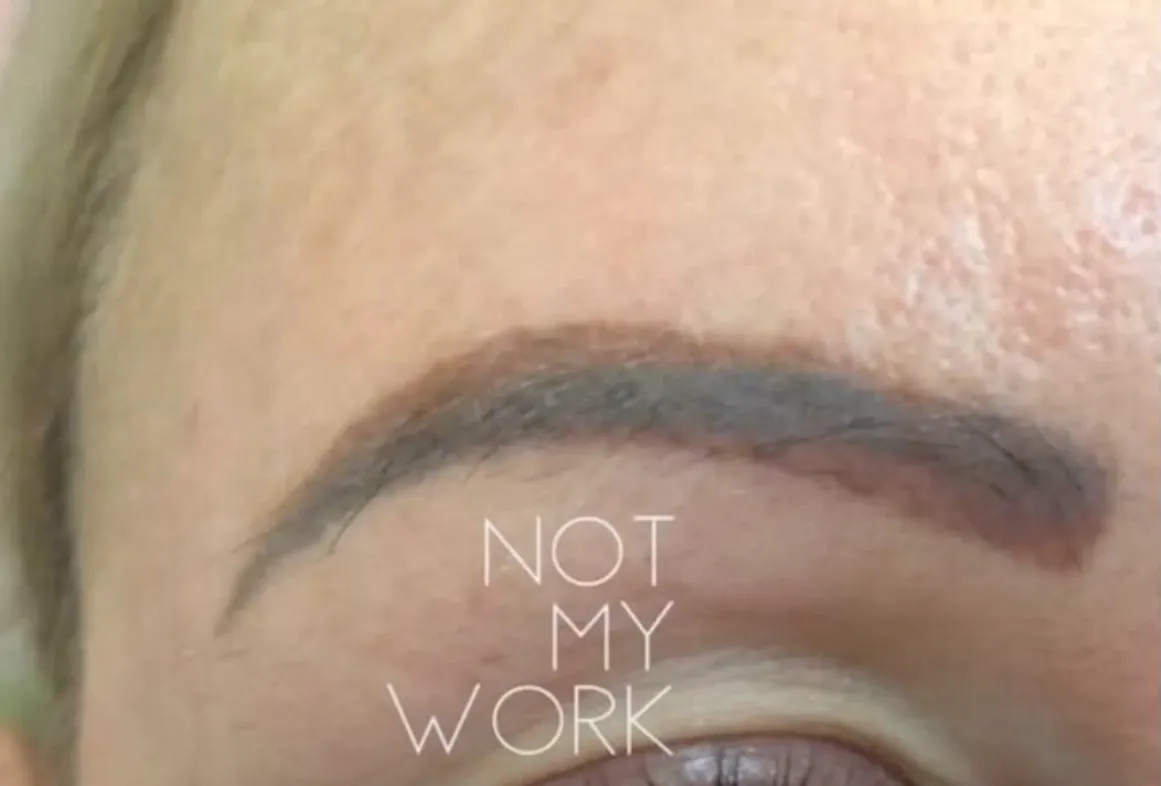
I can imagine your reaction. Yes, yes, this happens, and unfortunately not all that rarely. The artist's “inventiveness” is paid for by the client, who then has to get rid of the bad and very bad consequences.
As we have already established, a cover-up follows this simple formula:
Old pigment + new pigment = colour mush
So remember this once and for all — a cover-up does not solve the problem, it only masks it temporarily. And only for 1 to 3 months.
I am sure that neither you nor your client wants that kind of result.
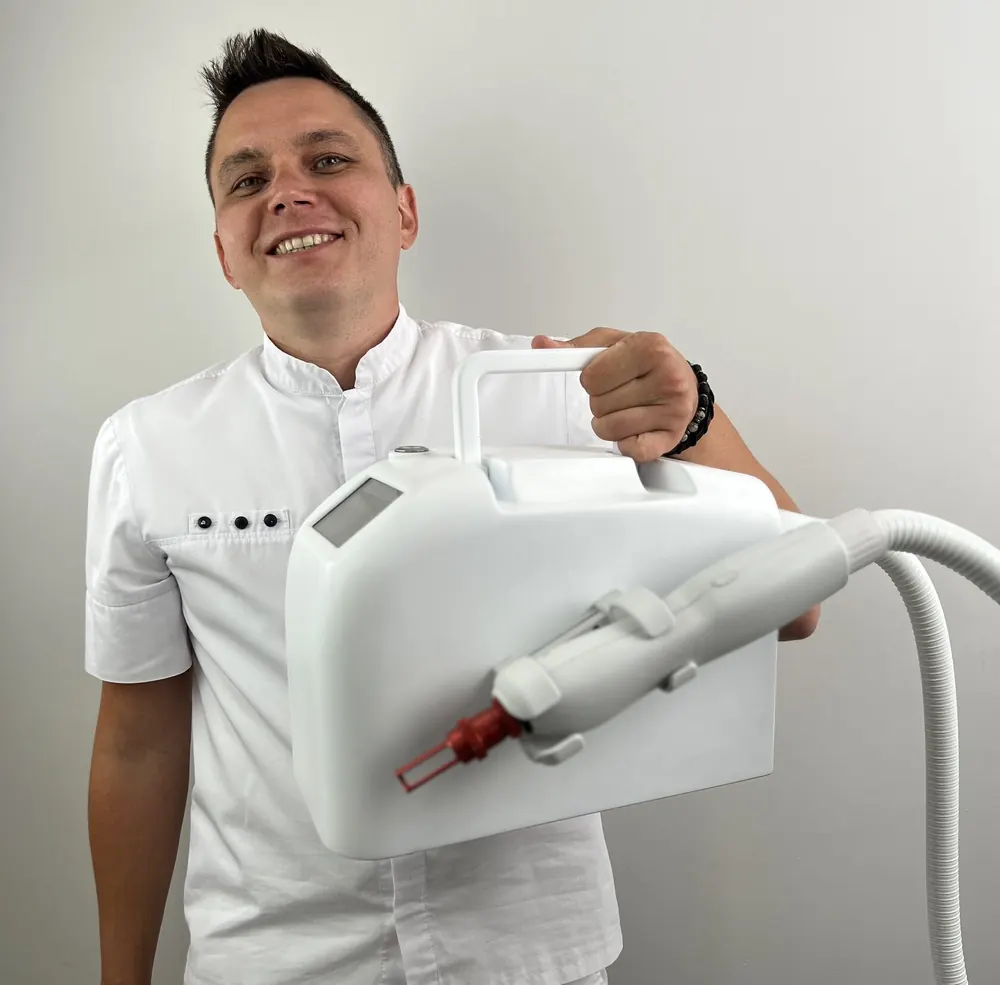
Good artists work for quality and approach tattoo or PMU removal thoroughly. They completely remove the old pigment before doing a cover-up!
An important note: there are many other nuances in laser removal that you must also take into account!
Why deep pigment looks blue
Move the slider: the same brown pigment at different depths.
A simplified illustration of the Tyndall effect: the deeper the pigment, the more short blue wavelengths in the reflected light.
Frequently asked questions
Can you cover up old PMU instead of removing it?
According to the author, no: the old and new pigments mix, and the old pigment, often far more stable, shows through. A cover-up does not solve the problem, it only masks it temporarily, for 1 to 3 months.
Can you cover blue eyebrows with a brown pigment?
If the old pigment is not removed, the brown shade fades and the old blue colour becomes clearly visible through it. The result can only be achieved after the old ink has been completely removed.