What happens to brow hairs during laser PMU removal?
Will brows fall out after laser eyebrow tattoo removal? Why a nanosecond laser does not work like hair removal and how to keep brow hairs from turning white.
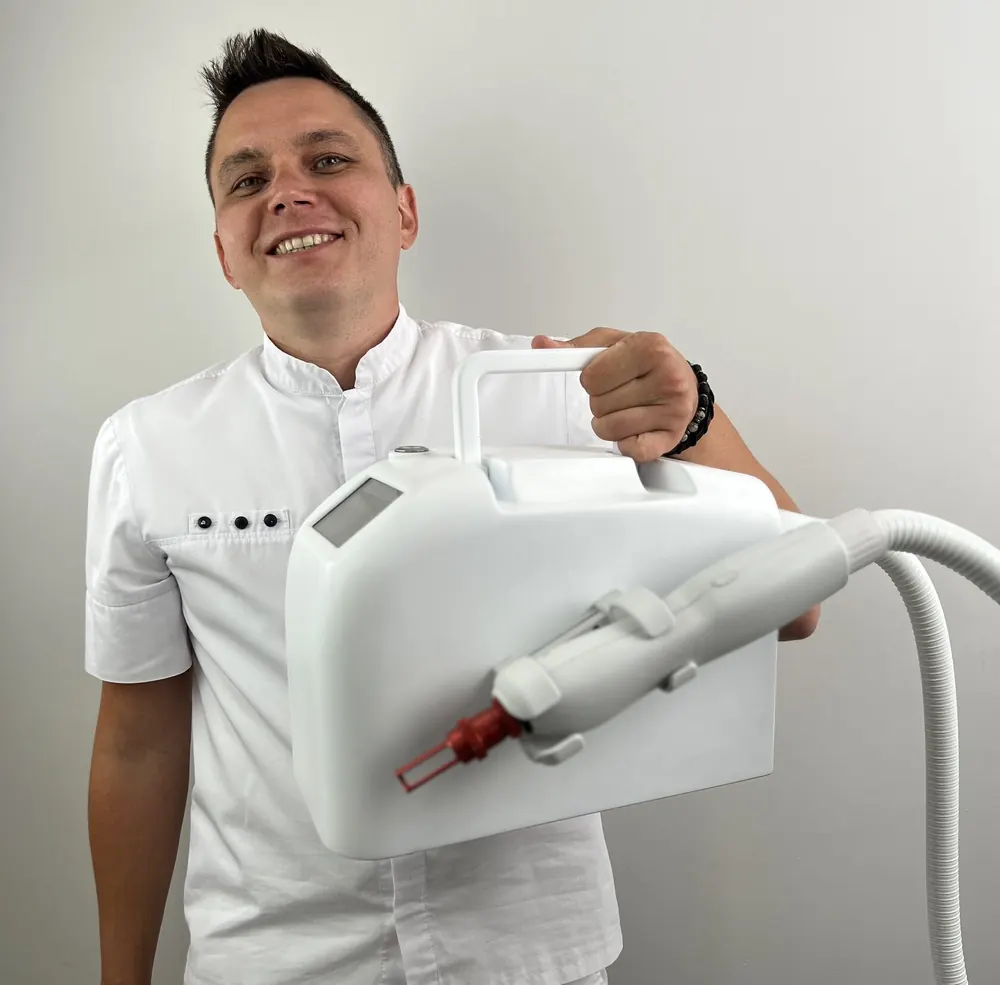
We are talking about the natural hairs that grow in your clients' brows!
The main fear clients have when they decide on laser removal of brow PMU is that their brows will fall out and never grow again.
In reality this has nothing whatsoever to do with the facts. The brows will grow exactly as before, because nanosecond lasers do not have a hair removal effect. These are completely different ranges of energy and pulse duration. That said, the hairs really can suffer a little during laser removal of brow PMU. What can happen to them?
Do you need to shave the brows before removal?
No, it is not necessary. Some articles recommend it, but it is optional: brow PMU can be removed without shaving off the hairs.
Can the hairs turn white or get burnt?
This can happen, but only under certain conditions — when a very high energy concentration and a small spot size are used. With large spots and moderate fluence the concentration is lower, and the hairs suffer much less or not at all.
A clear cold gel on the treatment area helps prevent whitening. And if the hairs do turn white, you can apply a cotton pad soaked in very cold water for 20–30 seconds — the colour will come back.
There is also a technique from the scientific article "Hair wax for preservation of eyebrows during laser tattoo removal": before the procedure, apply wax to the hairs and lift them upright, so they are less exposed to the laser.
You can tint the brow hairs a few days before the procedure; this will keep them from turning white. In general, even if the hairs do turn white, you can allow your clients to use cosmetics, including brow pencils, almost immediately after the procedure.
Will the hairs fall out for good?
No. Even if the hairs have turned white or are partly "burnt" on the outside, the bulbs are not damaged: the pulse of a Q-switched laser is too short. Some of the hairs may shed temporarily and then grow back. A Q-switched tattoo removal laser is not a hair removal device: it works on different principles and parameters and does not destroy the follicles.
Brows often grow better after removal
My observation, and that of many other specialists: after 1–2 laser brow PMU removal sessions, the hairs start to grow more actively. Where nothing grew, individual hairs appear; where growth was weak, the brows become thicker. Laser exposure stimulates blood flow and the follicles in the treatment area. But this is no reason to use a laser to treat hair loss: the procedure is justified by the tattoo in the treated area.
Conclusion
After laser PMU removal, the brow hairs will not stop growing, and in the experience of many specialists the brows often become thicker after a few sessions. Temporary colour changes can be corrected with cosmetics, so clients can be confident that the procedure is safe for their brows.
Frequently asked questions
Will eyebrows fall out after laser eyebrow tattoo removal?
No. Even if the hairs have turned white or are partly “burnt” on the outside, the bulbs are not damaged and the hairs keep growing: a Q-switched tattoo removal laser is not a hair removal device and does not destroy the follicles. Some hairs may shed temporarily and then grow back.
Do you need to shave your brows before laser tattoo removal?
No, it is not necessary: brow PMU can be removed without shaving off the hairs.
Why can brow hairs turn white during laser removal?
This can happen with a very high energy concentration and a small spot size. With large spots and moderate fluence the hairs suffer much less or not at all.
How do you keep brow hairs from turning white during laser removal?
A clear cold gel on the treatment area helps, and if the hairs do turn white, a cotton pad soaked in very cold water for 20–30 seconds brings the colour back. You can also tint the brow hairs a few days before the procedure, and clients can use cosmetics, including brow pencils, almost immediately afterwards.