Lasers for tattoo and PMU removal: why not to trust the manual
Laser tattoo removal settings in a compact Nd:YAG manual can't be trusted: the manual exists only so the device can be sold, and no universal settings exist.
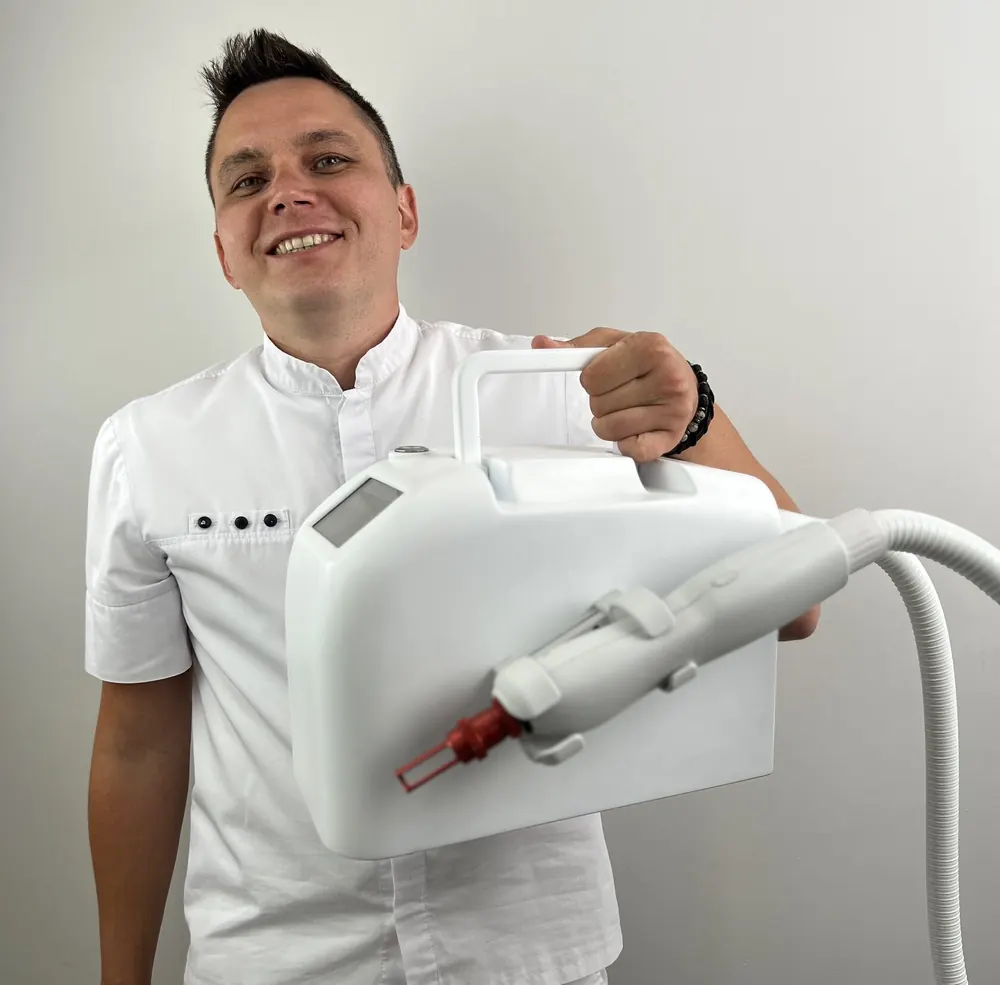

Imagine you have bought a brand-new Nd:YAG laser. You have unpacked everything and decided to take a look at the device's manual...
You will probably think, "Wow! There are even instructions in my language, I should take a look." You read it and see a whole guide with lots of numbers, parameters and directions.
It has everything: the number of hertz, the distance of the handpiece from the skin, the required energy, aftercare recommendations. Just pick up the laser and start working! (No.)
What's wrong with Chinese manuals? They seem perfectly reasonable...
Since childhood we have been taught to respect instructions, because they give a clear sequence of actions and guarantee a good result.
However, the leaflets you get after buying a laser come from a slightly different context. Manufacturers are required to write instructions for the device, otherwise they cannot sell it.
So the situation is "they demand it, so we write it". And these "we" are not always competent people!
Remember: a device manual is written not so that you work safely, but simply so that it exists.
The main problem is that you cannot verify whether the data written there makes sense. That is why I advise treating any kind of guide with healthy scepticism!
This is all too gloomy. Aren't there any good manuals?
I have read many of the "instructions" that come with Chinese devices. Most of them are technical translations, and sometimes outright nonsense: by following such directions, you put the client's health at risk.
Below I have attached an example of a Chinese laser manual:
| Task | Frequency, sec | Interval between sessions (days) | Description, recommendations |
|---|---|---|---|
| Eyebrows | 1–2 | 30–60 | Remove eyebrow hair before the procedure, protect the eyes |
| Eyelids | 1–3 | ?–60 | Protect the eyes |
| Lip line | 1–3 | — | Use the 532 nm filter (included) |
| Tattoos | 1–4 | 30–60 | Bleeding is possible |
| Age spots | 15 | 15–30 | Bleeding is possible |
| Moles | 35 | 45–90 | Bleeding is possible |
Warning! Do not follow these recommendations. Some values in the original are covered by an icon.
Note: in the work of a laser removal specialist, every case is individual. The client comes to you with a specific combination of factors: skin type and thickness, tattoo location, amount of pigment and so on.
There are no universal laser settings.
You cannot use the same settings in different situations; that is a recipe for complications!
Your task is to learn to think and to weigh up the facts that affect the final result of the removal. Then instead of burns and scars you will get grateful reviews from clients :)
Frequently asked questions
Are there universal laser tattoo removal settings?
No. Every case is individual: skin type and thickness, tattoo location, amount of pigment and so on. Using the same settings in different situations is a recipe for complications.
Can you use the settings from the laser manual?
The author advises treating any such guide with healthy scepticism. Manuals for Chinese devices are mostly technical translations, sometimes outright nonsense, and following them can put the client's health at risk.