How many laser sessions does it take to remove eyebrow PMU?
Laser eyebrow tattoo removal usually takes 2–5 sessions, at least 6–8 weeks apart. What decides the number, and why one brow and the tails clear more slowly.
Standard eyebrow PMU usually takes 2–5 laser sessions to remove, with a break of at least 6–8 weeks between them. As for the exact number, the honest answer is that nobody knows in advance. It depends on how much pigment is in the skin and how deep it lies, how many times the brows have been covered up, the client's skin type and her age. Simple brows need 1–3 sessions; difficult ones need more than five.
Why PMU does not come off in one session
A laser does not erase ink. A Q-switched laser delivers a pulse a few nanoseconds long. A pigment particle absorbs it and heats up so fast that it has no time to cool down, and it shatters into small fragments.
Then the body takes over. The fragments are captured by immune cells called macrophages. Small fragments are carried out of the skin to the nearest lymph nodes. Large clusters stay in the dermis, where new macrophages capture them again and again. One session breaks up only part of the pigment, and the skin needs time to carry the fragments away. I explained in detail how the body clears pigment in the article “What happens to the ink after laser PMU removal”.
What decides the number of sessions?
At the first consultation for standard PMU I give a range of 2–5 sessions, and most of the time it holds. Standard means light shading without excess pigment, put in shallow, with no scars, on the normal skin of a woman aged 30–40. Brows usually take fewer sessions to remove than tattoos. Anything that differs from this “standard” shifts the number of sessions one way or the other.
There will be fewer sessions (1–3) if: - there is little pigment and it was put in as a single layer; - the PMU is old; - the skin is oily; - the client is young.
There will be more than five sessions if: - the brows have been covered up many times, by different artists with different pigments (I have seen 7–8 procedures in 5 years); - the last PMU was done recently, for example 3 months ago; - the skin is dry; - there are marked scars in the brow area; - the client is 60 years old and smokes.
If the brows fit the second list, it is better to agree with the client on a long course before the first session. With multiple cover-ups the brow colour also changes during the course of treatment, depending on which pigments are in the skin. Why brows turn blue, grey or yellow I have covered separately.
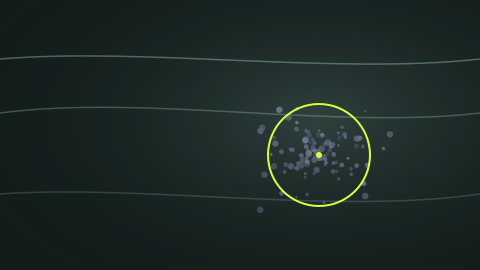
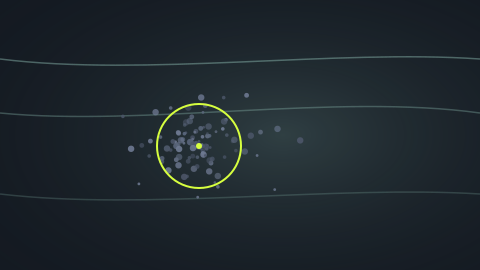
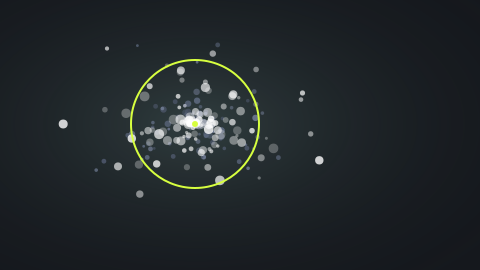
What a pulse does to a pigment particle
Press “Pulse” a few times.
Pigment sits in the dermis as clusters of particles. The body cannot clear them on its own: they are too large.
A simplified scheme: macrophages carry away small fragments, large ones stay and are recaptured by cells — this is why removal takes several sessions.
How many sessions will it take?
A quick estimate on the Kirby-Desai scale — for tattoos.
10 sessions, approximately
A rough estimate. More on the Kirby-Desai scale page.
Why does one brow clear faster than the other?
In roughly 80% of cases the right and left brows hold different amounts of pigment. Clients themselves usually do not notice. The reason lies in how PMU is done: the artist sits to the right or left of the client and puts more pigment into the brow nearer to them. The brow with more pigment may need an extra session. It is worth telling the client this in advance, so that she judges the result against the starting picture.
The asymmetry can also be felt: even with identical settings, one brow hurts more than the other.
Why do the brow tails lag behind?
The skin in the brow tail, towards the temple, is noticeably thinner than on the forehead. If the PMU artist does not ease the pressure towards the tail, the pigment goes in deeper and denser. During removal such tails lag behind the body and front of the brow and may also need extra sessions. Why pigment clears in patches in the first place, I explained in the article “Why PMU and tattoos fade unevenly after laser removal”.
When a laser will not remove eyebrow PMU
Failed PMU is sometimes “masked” with white or skin-tone pigment. A Q-switched Nd:YAG laser will not remove such areas: white reflects almost all of its light. Worse, under the beam white and skin-tone pigment can darken to a greyish green. Sometimes these areas are later treated with other lasers (an alexandrite laser at 755 nm or a picosecond laser), and sometimes they are simply shielded from the pulse. This is decided together with the client before work begins. What to do with white pigment is covered in the article “How to remove a white tattoo”.
How often can you have sessions?
The minimum interval is 6–8 weeks, and longer is better. A laser is a hammer that breaks stones. But it is the immune system that has to clear the stones out of the pit, and it needs time. If the client comes back sooner, a new batch of fragments lands on top of those not yet cleared, the session works less well and the load on the skin grows. What really speeds up removal and what does not is covered in the article “How to speed up laser tattoo or PMU removal”.
Can you calculate the number of sessions in advance?
As a guide there is an online test based on the Kirby-Desai scale: it takes into account skin type, location, pigment density, layers and colour. It is a hint, not a promise: the speed of removal also depends on the quality of the device, the settings and the technique.
First we learn, then we shoot lasers at living people — not the other way round. How to assess brows at a consultation, which wavelength to choose for the pigment colour, what to do about asymmetry, brow tails and “masking” — we cover all of this in the LaserPRO course on laser removal of PMU and tattoos.
Frequently asked questions
How many laser sessions does it take to remove an eyebrow tattoo?
Standard eyebrow PMU usually takes 2–5 laser sessions to remove. Simple brows need 1–3 sessions; difficult ones (many cover-ups, a recent PMU, dry skin, scars) need more than five. The exact number depends on how much pigment is in the skin and how deep it lies, how many times the brows have been covered up, the client's skin type and her age.
How long between laser eyebrow tattoo removal sessions?
The minimum interval is 6–8 weeks, and longer is better. The laser only breaks up the pigment; it is the immune system that clears the fragments, and it needs time. If the client comes back sooner, the session works less well and the load on the skin grows.
Why does one eyebrow clear faster than the other?
In roughly 80% of cases the right and left brows hold different amounts of pigment: the artist sits to the right or left of the client and puts more pigment into the brow nearer to them. The brow with more pigment may need an extra session.
Why do the brow tails take longer to remove?
The skin in the brow tail, towards the temple, is noticeably thinner than on the forehead. If the PMU artist does not ease the pressure towards the tail, the pigment goes in deeper and denser, so during removal the tails lag behind and may need extra sessions.
Can a Q-switched Nd:YAG laser remove white or skin-tone pigment on the brows?
No: white reflects almost all of its light, and under the beam white and skin-tone pigment can darken to a greyish green. Such areas are sometimes treated later with other lasers (an alexandrite laser at 755 nm or a picosecond laser) and sometimes simply shielded from the pulse; this is decided together with the client before work begins.