Why a tattoo darkens after the first laser removal session
Why an old faded tattoo darkens after the first laser session: pigment clusters breaking up, the Tyndall effect, and why it is no cause for alarm.

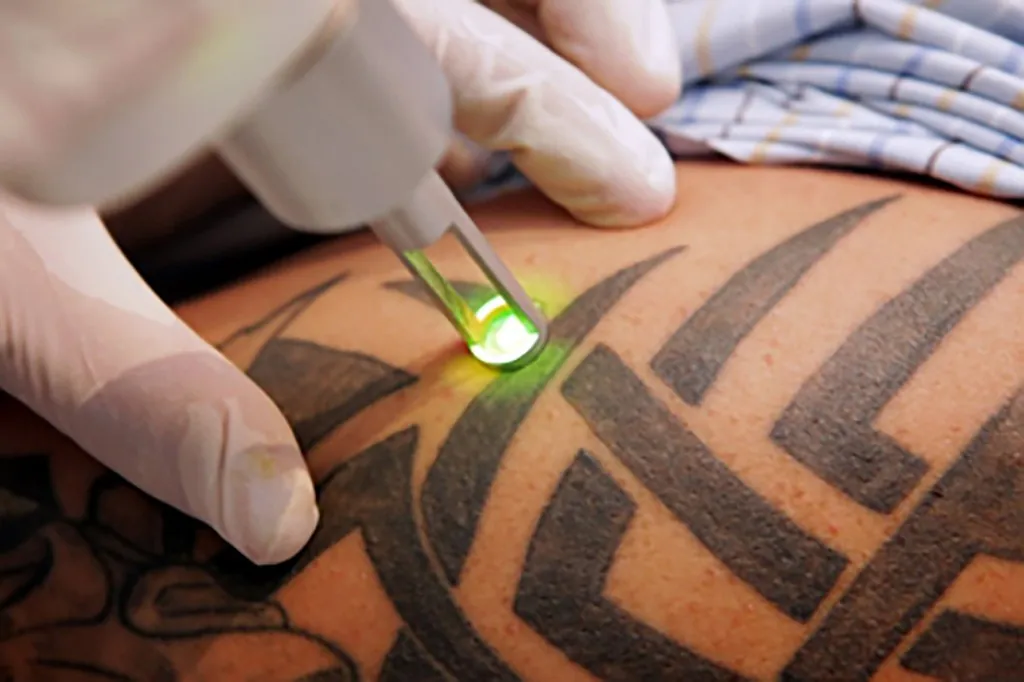
I often get astonished questions, from specialists and clients alike, when they face a situation where an old, faded, bluish tattoo suddenly becomes a much darker, more saturated colour after the first, and sometimes the second, laser removal procedure. This often frightens clients, and specialists too. They do not understand why it happens or what to do about it. Let's work it out.
What happens when a tattoo darkens?
In fact, this is an absolutely normal situation. And it is especially typical of old, already faded, bluish tattoos that are 10–20 years old or more.
In an old tattoo, the pigment particles have already sunk quite deep into the skin and have clumped together, you could even say, into a large cluster. Because of the Tyndall effect you see a bluish undertone, and overall the tattoo looks quite faded. When we treat the tattoo with a laser, the large pigment clusters undergo micro-explosions, and the pigment particles are broken up and redistributed inside the skin. This is accompanied by inflammation, swelling, redness and so on.
But the most interesting thing is that the pigment particles become smaller and move slightly inside the skin, including rising closer to the surface.
The physics behind the colour change
There is a physical rule of colour perception: the smaller the pigment particles, the blacker the tattoo is perceived. No new ink particles have been added; the tattoo looks darker because the pigment particles have been broken up and redistributed inside the skin as a result of the laser treatment.
The tattoo will not get blacker and blacker every time! This is typical of the first removal sessions. After that, the amount of pigment will gradually decrease from session to session and the tattoo will fade. The darkening is just an optical effect caused by the pigment particles being broken up and redistributed. No new particles appear there, so there is no reason to worry. You just need to know this.
Awareness is the key to understanding
Understanding the mechanism of darkening after laser removal helps you assess the process correctly and avoid unnecessary worry. Knowing these facts lets you calmly continue the course of laser tattoo removal, expecting the tattoo to lighten gradually.
Frequently asked questions
Why does a tattoo get darker after the first laser removal session?
The laser causes micro-explosions of large pigment clusters, and the particles are broken up and redistributed inside the skin, including rising closer to the surface. The smaller the pigment particles, the blacker the tattoo is perceived, although no new ink particles have been added.
Will the tattoo get darker after every session?
No, this is typical of the first removal sessions. After that, the amount of pigment gradually decreases from session to session and the tattoo fades.
Which tattoos are most likely to darken after laser treatment?
It is especially typical of old, faded, bluish tattoos that are 10–20 years old or more. Their pigment has sunk deep and clumped into large clusters, and because of the Tyndall effect you see a bluish undertone.