Do tattoo needles cause allergies? Fact or myth
Can tattoo needles cause allergies? A 2019 study found nickel and chromium in skin and lymph nodes, worn off the needle by titanium dioxide in ink.


The word "allergy" scares every PMU (permanent makeup) artist. It is a very common problem, and people are quick to blame the pigments or the specifics of the client's skin.
But a couple of years ago another possible cause of allergy emerged: tattoo needles!
In 2019 a group of scientists carried out a study and proved that metal particles from tattoo needles get into the human body (link to the study: https://link.springer.com/article/10.1186/s12989-019-0317-1).
Originally the scientists wanted to build a database of pigment particle sizes and residual elements in the human body. One of the subjects had delayed hypersensitivity to a tattoo and a reaction to nickel.
They found that ink particles ranging from 50 nm (and smaller) up to a micrometre are retained in the skin and lymph nodes. All tissues with tattoo pigment contained particles of iron, chromium and nickel, and these particles were observed in close association with titanium particles.
Iron, nickel... Where did all this come from in the skin?
The scientists suggested that this "cocktail" of iron, chromium and nickel comes from the tattoo needles. Titanium, an extremely hard metal, is found in many tattoo colours.
Tattoo needles are 6–8% nickel and 15–20% chromium and steel. Chromium and nickel are known to cause allergy (hypersensitivity) at the tattoo site.
To confirm the hypothesis, they first tested 50 different tattoo inks for chromium and nickel content. Neither metal was found in the pigments.
In addition, the scientists decided to check how tattoo needles wear during tattooing. They tattooed pig skin with two colours: an ink containing titanium dioxide and a Carbon Black pigment.
The skin sample with the "titanium" tattoo contained far more metal particles, and on inspection the needle was heavily worn. This is the effect of titanium dioxide: it acts as an abrasive and wears particles off the needle! And then they end up in the skin.
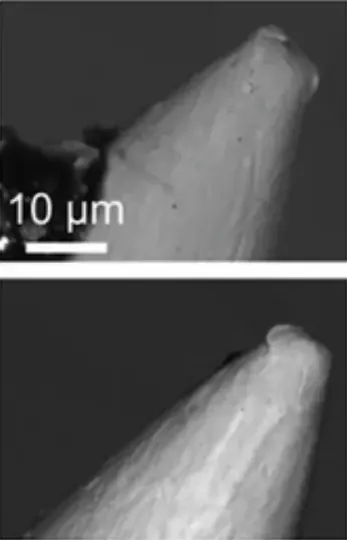
Unused needles
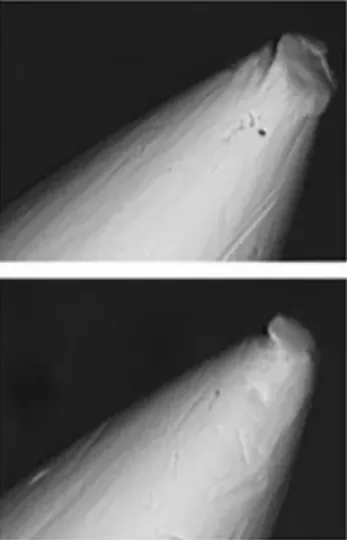
Needles after tattooing: Carbon Black
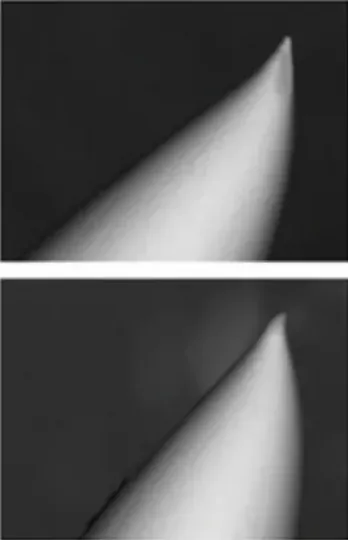
Needles after tattooing: titanium dioxide TiO2 (note the polishing effect)
I see, but what does this have to do with allergy?
As we already know, tattoo needles contain nickel and chromium. And these are among the strongest allergens. Nanoparticles of these metals get into our skin, then into the lymphatic system, and trigger a reaction in the body. That is how an allergy develops!
The process is shown in more detail in the picture:
Wow... So tattoo needles can trigger allergies too?
Most likely, yes. Although it is still not entirely clear what causes tattoo allergy, we should take this information into account.
The study described above looked at one more factor behind tattoo sensitivity, but I am sure this topic will be developed further.
Frequently asked questions
Can tattoo needles cause an allergic reaction?
Most likely, yes. A 2019 study found iron, chromium and nickel particles in tattooed skin and lymph nodes, and tattoo needles contain 6–8% nickel and 15–20% chromium, known allergens. It is still not entirely clear what causes tattoo allergy.
Why do inks with titanium dioxide wear down tattoo needles?
Titanium dioxide acts as an abrasive and wears particles off the needle. In pig skin tattooed with a titanium dioxide ink, the needle was heavily worn and the skin contained far more metal particles than with a Carbon Black pigment.