How does laser tattoo removal work? Explained simply
In simple terms: why tattoo pigment stays in skin, how nanosecond and picosecond lasers shatter it, and which colours 1064, 532 and 755 nm remove.
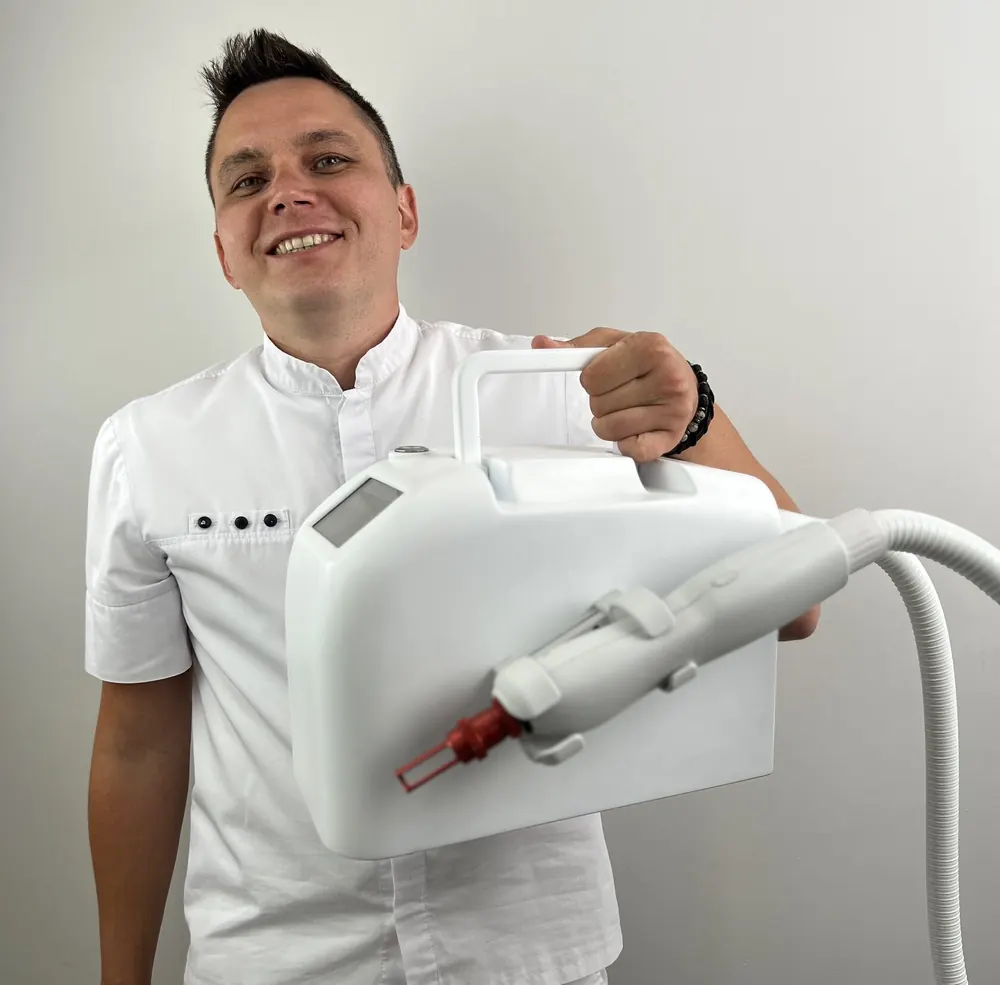
Laser tattoo removal is a complex and fascinating process from a scientific point of view, but in this article I will try to explain it as simply and clearly as possible, using simple examples.
Laser tattoo removal: a detailed overview
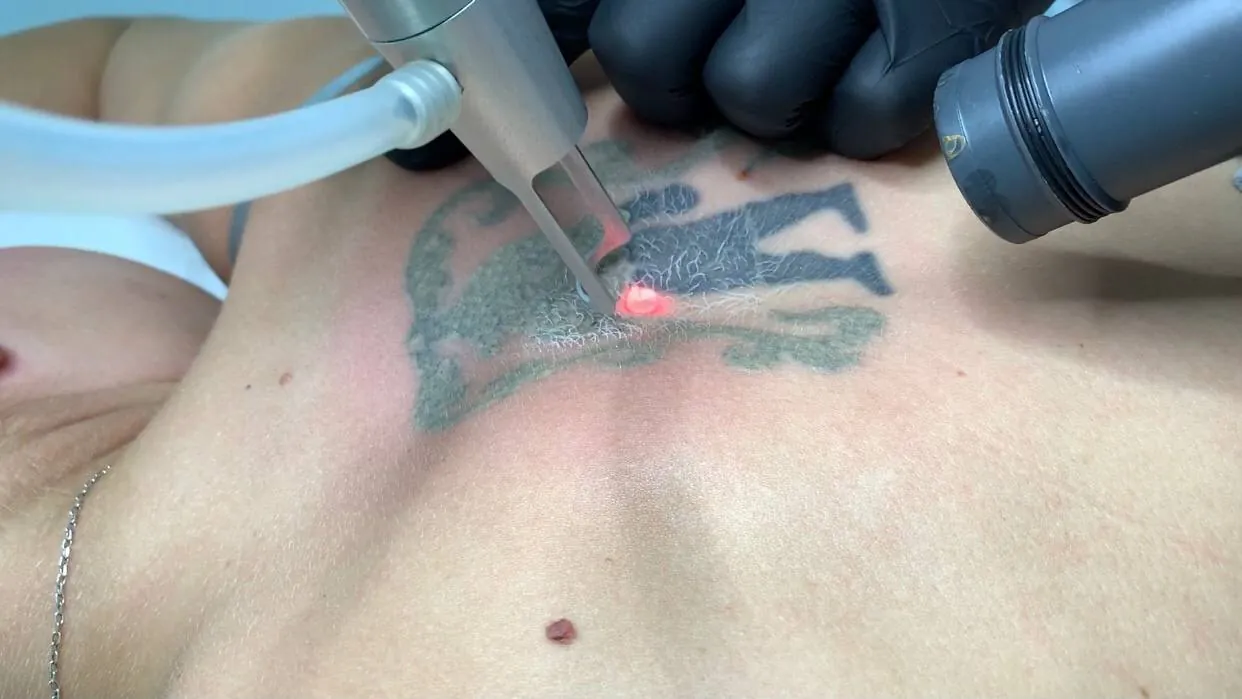
What is a tattoo, and why is it not always easy to remove?
People have been getting tattoos for tens of thousands of years. At first, ash and whatever was at hand served as pigments; today the tattoo industry produces high-tech inks in every possible colour. There are even glowing, disappearing and appearing inks! (More on disappearing inks in the article about Magic Ink.)
The main component of an ink is tiny insoluble particles of different colours, called pigments. It is these particles, staying in the middle layer of the skin, that form the tattoo design you see when you look at the skin surface. Pigment particles are designed from the start to resist various physical and chemical influences, and they can remain in the skin for years or even decades.
The size of pigment particles is chosen so that the immune cells that keep "order" in the skin cannot engulf them and remove them from the skin! From a cell's point of view, they are quite large. That is why tattoo pigment particles do not migrate through the skin.
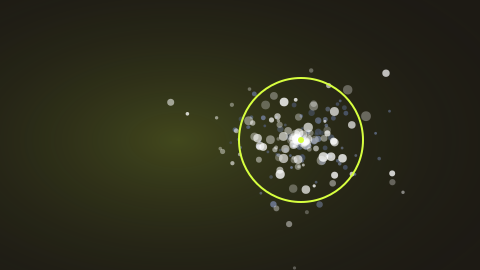
What a pulse does to a pigment particle
Press “Pulse” a few times.
Pigment sits in the dermis as clusters of particles. The body cannot clear them on its own: they are too large.
A simplified scheme: macrophages carry away small fragments, large ones stay and are recaptured by cells — this is why removal takes several sessions.
Which lasers are used for tattoo removal?
For as long as tattoos have existed, so has the wish to remove them and clear the skin of an unsuccessful or unwanted design. But before special lasers were invented, it was impossible to remove a tattoo without damaging the skin!
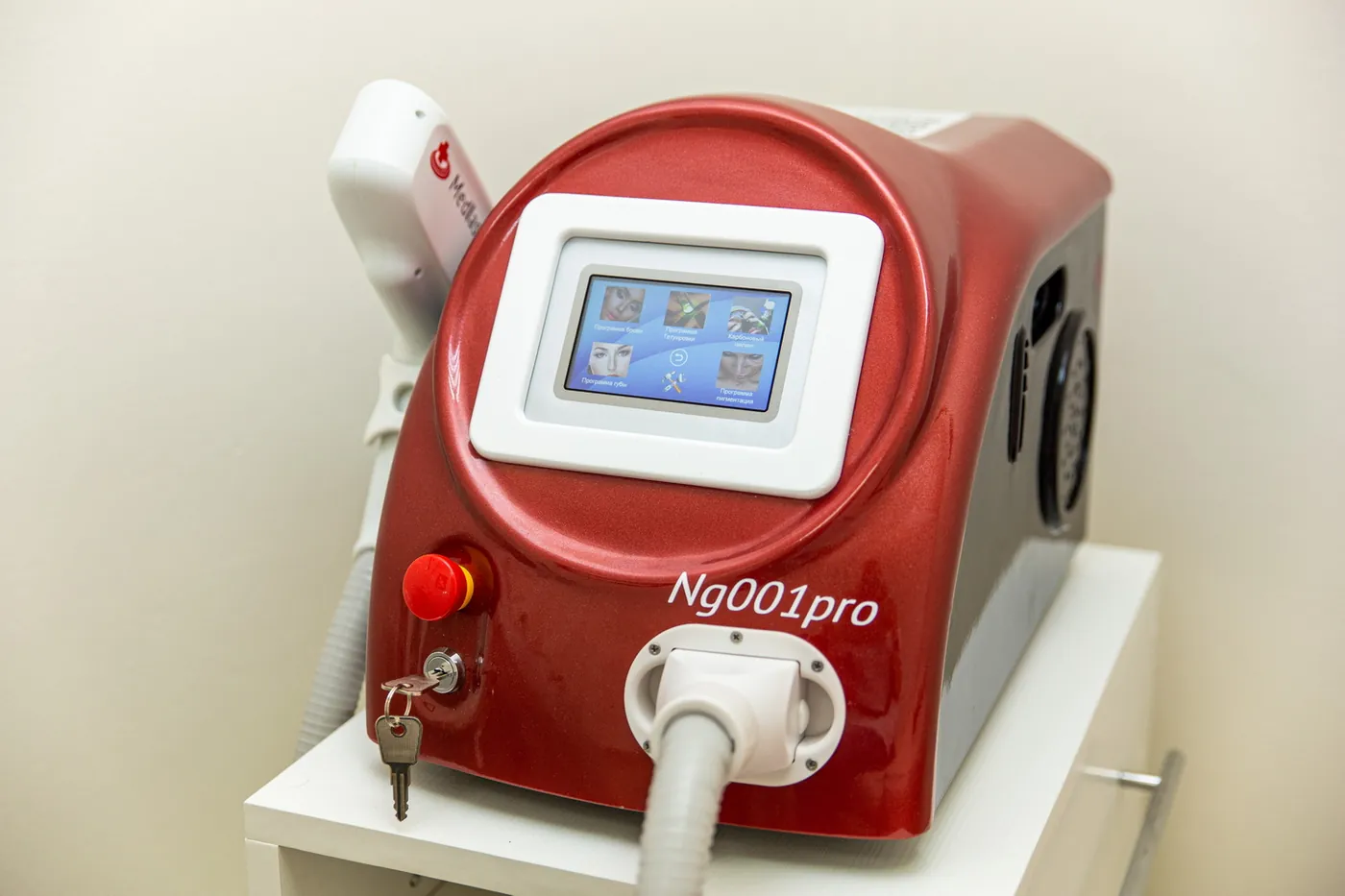
When specialised nanosecond lasers appeared (and later picosecond ones), it became possible to destroy pigment particles without destroying the surrounding skin (when used correctly). Tattoo removal requires a special laser with an incredibly short pulse duration. Just any laser will not do: it has to be a nanosecond or picosecond laser.
Why does a short laser pulse matter?
For reference:
a nanosecond is 1/1,000,000,000 of a second
a picosecond is 1/1,000,000,000,000 of a second
That is a very short span of time!
For example, in 1 nanosecond light travels 30 centimetres, and in 1 picosecond only 0.3 millimetres.
Why does the pulse have to be this short? The laws of physics are at work here. To destroy a tattoo pigment particle in the skin, the laser pulse has to be faster than the time it takes that particle to cool down! Then the particle heats up to a supercritical destruction temperature before it can burn the surrounding tissue. It is literally blown to pieces…
The process is, of course, far more complex, but put very simply, that is the essence.
What happens to the tattoo after laser treatment?
In essence, the laser shatters the large tattoo pigment particles in the skin into smaller ones. They then become accessible to immune cells for clean-up!
Immune cells remove the small tattoo pigment particles from the skin and carry them out of the body (this is also simplified, because some of the pigment particles settle in the lymph nodes; there is no health risk, and I will explain this in another article). This is how the tattoo fades and the amount of tattoo pigment in the skin decreases. It is not a quick process and requires many repeat treatments, but the tattoo is removed completely, without skin injury or scarring (when the procedures are performed correctly)!
Can every colour and every tattoo be removed?
Unfortunately, no. Whether a tattoo can be fully removed depends on dozens of factors, including the quality of the laser equipment. And not all colours break down equally well. Tattoo removal lasers have a limited set of wavelengths, and only the colours for which the laser has suitable wavelengths can be removed.
Chart of laser wavelength effectiveness depending on the colour of the tattoo pigment
The most common tattoo colours, black and red, are removed well by the most popular Nd:YAG lasers with wavelengths of 1064 nm (for black) and 532 nm (for red). Green and blue require other lasers, such as alexandrite (755 nm) or ruby (694 nm), but these too must be nanosecond or picosecond lasers.
Ideally, for the widest range of possibilities you would have several laser devices, both nanosecond and picosecond, with different wavelengths. Then the chance of dealing with most tattoos rises considerably! That said, for simple black tattoos even an ordinary compact Chinese laser is enough.
Frequently asked questions
How does laser tattoo removal work?
A nanosecond or picosecond laser pulse is faster than the time a pigment particle takes to cool, so the particle heats to destruction temperature and shatters into smaller pieces. Immune cells then remove these small particles from the skin.
Why do tattoos stay in the skin?
Pigment particles are designed to resist physical and chemical influences and are too large for immune cells to engulf, so they stay in the middle layer of the skin for years or even decades.
Does laser tattoo removal work completely?
A tattoo can be removed completely, without skin injury or scarring, when the procedures are performed correctly, but it is not quick and requires many repeat treatments. Whether full removal is possible depends on dozens of factors, including the laser equipment and the colours.
Is a compact Chinese laser enough for tattoo removal?
For simple black tattoos even an ordinary compact Chinese laser is enough. For the widest range of possibilities you would ideally have several nanosecond and picosecond devices with different wavelengths.